
State Bank of India's house economists on Monday said the recent farm sector reforms reek of parochial thinking and promote lazy farming as they only cater to cereal-producing states. In the recently concluded monsoon session, the government rushed through three legislation to change the way agricultural produce is marketed, sold and stored by dismantling the decades-old APMC (Agricultural Produce Market Committee) mandis.

'While there has been an impact on economic activity, it is not as profound as the lockdown last year.'

'India has about 22,000 tonnes of private gold, held by individuals and temples.' 'Much of this is locked up in safes and vaults as a dead investment. If we can put the vast reserves of gold to use, it would boost the economy,' says V P Nandakumar, executive chairman, Manappuram Finance, India's first listed gold loan company.

It became increasingly clear that the real negotiations the government had to conduct were with Indian business which was wary of yet another free trade agreement, points out T N Ninan.
The non-oil, non-finance sector of the economy is under severe stress.

Like pharmaceutical companies globally - which used to enjoy a preferential exchange rate in Venezuela - Indian producers have been left badly stung by the collapse of the bolivar currency

'There is a misconception that gold is a dead asset in India.' 'Around 30 per cent of agriculture loans are collateralised by gold, Soumya Kanti Ghosh and Saket Hishikar, economists at the SBI, point out.

American media has taken a critical view of his accomplishments, saying his flagship 'Make in India' drive is "so far mostly hype."

India's trade deficit shrank to a 10-month low in December as global oil prices tumbled and demand for gold fell, auguring well for Indian current account balance and the rupee.

The Finance Ministry expects GDP growth to be 8-8.5 per cent in 2015-16.

The meeting will focus on how to make the crisis an opportunity for India.

Oil and gold had accounted for 45 per cent of India's imports bill in 2012-13.
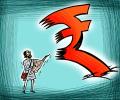
The rupee appreciated 7 paise to 79.74 against the US dollar in early trade on Thursday as a positive trend in domestic equities supported the local unit. However, a strong American currency overseas and forex outflows restricted the rupee's gain, dealers said. At the interbank foreign exchange, the rupee opened at 79.72 against the American dollar, then went lower to trade at 79.74 against the greenback in early deals, registering a gain of 7 paise over the last close.

Observing that the economic recovery was not yet fully entrenched, the RBI Governor said recovery is likely to be gradual.
.jpg)
Fag-end dollar selling by exporters helped the rupee to recover lost ground and settle at the day's high of 60.77, a gain of 11 paise. The rupee earlier touched an intra-day low of 61.21 on July 8.

Chief Economic Adviser K V Subramanian on Monday said the overall impact of the second wave of COVID-19 on the country's economy is not likely to be large but cautioned about an uncertainty surrounding the pandemic going ahead. He further said that given the circumstances due to the pandemic, it is difficult to forecast if the country would achieve a double digit growth in the current fiscal. The Economic Survey 2020-21 released in January this year had projected GDP growth of 11 per cent during the current financial year ending March 2022.

Martand Singh, the master of weaves, took India to the world.

Depreciating the rupee against the dollar to boost economic growth has fiscal constraints and monetary limitations

RBI must balance the need for improving domestic bank credit demand and respond to lower inflation.
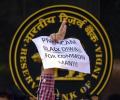
Business activity contracted in Q2 FY20, the first contraction since 2013-14 and the second since the 2008 global financial crisis, report, Abhishek Waghmare and Anup Roy.

The Chinese currency too is expected to continue its fall.

The challenges before the coming Budget are more daunting than those in 2021, reveals A K Bhattacharya.

Seeking to boost the strategic ties, India and the US finalised the text of the Logistics Exchange Memorandum of Agreement.

'If you are invested in mid-cap and small-cap stocks, even if you are making losses right now, it is better to sell them now and sit on cash.'

'The most important thing is that the psychological signal it is giving to the markets and international markets,' says former finance secretary Arvind Mayaram.

The trio, 'twin shocks' of demonetisation and GST, 'twin balance sheet' problem that has been weakening India's banking system and the 'twin deficit' problem will continue to challenge economic management and performance in the year ahead, says Shankar Acharya.
A look at six indicators shows all of them have collapsed from positive growth in April to contraction in September.

"Under different scenarios, we see the impact of higher crude prices ranging from $25 billion to a maximum of $50 billion on the oil import bill. The increase in the oil import bill will also affect the current account deficit," economic affairs secretary S C Garg said in a conference on Friday.

At 12:25 PM, the barometer index, the S&P BSE Sensex was down 358 points or 1.3% at 26,368.

Dollar gained against major currencies overseas.
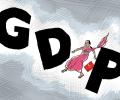
'There are some encouraging signs.' 'Notice that we have not said 7%-plus, we are keeping it at 6% to 6.5%.'

We must see New Delhi's position as a signal of competition to the Chinese grand design for the 21st century world, says Nitin Pai.
The huge pressure on the currency market largely went unnoticed because of the demonetisation exercise.
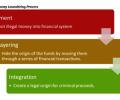
In the Anti Money Laundering (AML) Basel Index 2013 India has been ranked 93rd and 70th in 2012 and 2013 respectively out of 140 countries.

Government unveiled the much-awaited FTP for 2015-20 on April 1, 2015.

The start-up mentors debated if they could drive the price further down, but feared an even lower price would raise doubts about its quality, as was the case with the Tata Nano, reports Amrita Singh.
It's time to step on the reforms accelerator.

RBI said the continuing sluggishness of the global economy led to some moderation in exports growth and invisible receipts, while import growth accelerated due to the strong domestic recovery.

Gitanjali Gems and Firestar Diamonds together account for 5.8 per cent of the diamond and jewellery trade in India.
Pharma shares were the top gainers led by Lupin after the company received EIR from USFDA for its Goa facility
